
Combining indoor house plants with fish tanks creates one of the most natural and visually appealing home displays. When done correctly, it not only enhances the beauty of the aquarium but also helps maintain a healthier environment for fish.
Unlike traditional submerged aquarium plants, these indoor plants grow above the tank while their roots stay in the water. This setup allows them to absorb excess nutrients from the aquarium, helping improve water quality and reduce algae growth.
In this guide, you will discover the best indoor house plants for fish tanks in 2026, how they benefit your aquarium, and simple setup tips for beginners. Read More: 12 Stunning Indoor House Plants with Red Flowers (2026 Guide)
Why Use Indoor House Plants in Fish Tanks?
Indoor plants placed in or around aquariums offer several natural benefits:
- They absorb nitrates and other waste nutrients from the fish water
- They help reduce algae growth naturally
- They improve oxygen balance in the environment
- They create a more natural and aesthetic aquarium setup
- They provide shelter and comfort for fish and shrimp
When the plant roots grow in water, they act like a natural filtration system, helping maintain cleaner and healthier tank conditions. Most houseplants used this way don’t change pH directly, the way driftwood or tannin-releasing wood does. Their real effect on pH is indirect; by pulling nitrates out of the water column, they reduce the acid-forming byproducts of the nitrogen cycle, which can help keep pH more stable over time rather than dramatically shifting it in either direction.
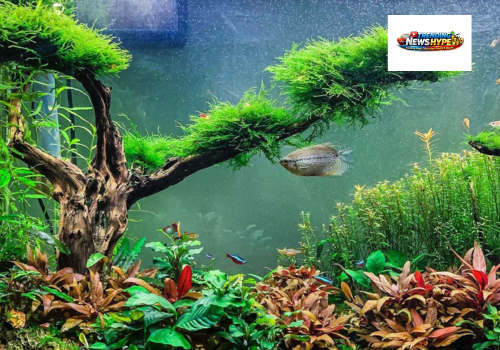
How to Set Up House Plants in a Fish Tank
Setting up indoor plants in an aquarium is simple and does not require advanced equipment.
- Choose a healthy cutting or small plant from a nursery
- Wash the roots thoroughly to remove all soil (important to avoid ammonia spikes)
- Trim damaged or overly long roots
- Place only the roots in water while keeping leaves above the surface
- Use suction cups, clips, or filter holders to support the plant
- Wait 1–2 weeks for new aquatic roots to develop
Most plants adapt quickly once they access nutrient-rich water from the aquarium. Aquarium hobbyists who track this closely report that nitrate-reduction typically isn’t strong right away; most setups need about two to three months for terrestrial roots to fully convert into aquatic-adapted roots before nutrient uptake becomes consistent, even though early growth can look fast.
1. Pothos (Devil’s Ivy)
Pothos is the most popular and reliable plant for aquarium setups. It grows quickly and adapts to almost any condition, making it perfect for beginners.
Care Benefits:
- Removes excess nitrates from water
- Grows in low or bright light
- Requires very little maintenance
- Produces strong trailing vines for decoration
Its roots grow directly into the water, helping keep the tank naturally clean.
Fish Safety: Pothos isn’t a fully “safe” plant if eaten; it contains calcium oxalate crystals that can irritate a fish’s mouth and gut if a fish actually bites into the roots or leaves. In practice, this rarely matters because most fish ignore it, but it’s worth keeping out of tanks with known plant-nibblers like goldfish or some cichlids.
pH Effect: No direct effect on pH. The benefit is indirect; fewer nitrates in the water means less strain on your buffering capacity over time, which helps pH stay more stable between water changes.
Best Placement: Hang-on-back filter compartments or floating baskets work best, positioned away from the filter’s intake so the fast-growing roots don’t tangle in the impeller.
2. Lucky Bamboo
Lucky Bamboo is widely used in aquariums for its elegant appearance and easy care.
Care Benefits:
- Improves water quality naturally
- Requires only root submersion
- Adds a minimal, modern aesthetic
- Very low maintenance plant
Fish Safety: Lucky bamboo (Dracaena sanderiana) is generally considered low-risk for fish since it isn’t a favored target for nibbling, but it isn’t a true aquatic plant either, so prolonged full submersion of the stalk (not just the roots) can cause it to rot and foul the water.
pH Effect: Minimal and indirect — like pothos, any influence on pH comes from modest nutrient uptake rather than releasing anything into the water.
Honest Care Challenge: Lucky bamboo is often sold pre-treated with dyes or waxed stem ends for the houseplant trade; check that any specimen destined for an aquarium hasn’t been chemically treated before adding it to a tank with fish.
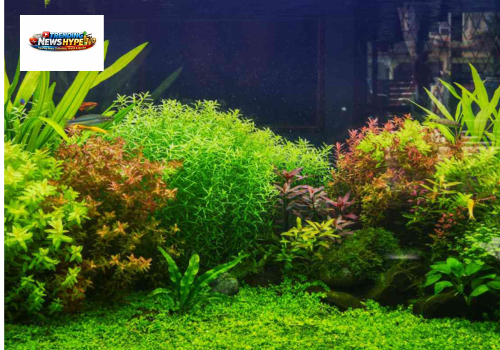
3. Peace Lily
Peace Lily works well in open-top fish tanks where its roots can stay submerged.
Care Benefits:
- Helps reduce toxins in water
- Produces elegant green foliage above the tank
- Grows well in indirect light
- Enhances natural aquarium aesthetics
Fish Safety: This one needs a caveat. Peace lily contains calcium oxalate crystals throughout the plant, and fishkeeping resources specifically list it among plants that can cause irritation, swelling, or digestive issues. if a fish or shrimp ingests roots or fallen leaf matter. It’s commonly used safely in tanks precisely because most fish don’t eat it, but tanks with snails, shrimp, or known leaf-grazers should use a different plant.
pH Effect: No meaningful direct effect on pH; benefits are limited to nutrient uptake from the root zone.
Honest Care Challenge: Peace lily roots can rot if kept constantly waterlogged rather than just submerged in moving, oxygenated tank water, so good water flow around the root mass matters more than with hardier choices like pothos.
4. Spider Plant
Spider plants are highly adaptable and work well in semi-aquatic environments.
Care Benefits:
- Fast-growing root system
- Helps absorb waste nutrients
- Safe for most freshwater tanks
- Produces attractive arching leaves
Fish Safety: Spider plant is widely regarded as one of the safer options if nibbled, since it lacks the calcium oxalate crystals found in pothos and peace lily — making it a reasonable pick for tanks with curious or grazing fish.
pH Effect: Indirect only, through nitrate and ammonia uptake at the root zone; no tannins or acids are released.
Honest Care Challenge: Spider plants need their roots to stay in contact with water, but not constantly waterlogged in stagnant pockets, since rot can set in faster than with pothos if flow is poor.
5. Philodendron
Philodendrons are strong, tropical plants that thrive with their roots in water. Read More: Best Indoor Plants for Air Quality: Natural Ways to Improve Your Home Environment
Care Benefits:
- Low maintenance and hardy
- Excellent for nutrient absorption
- Grows well in indirect light
- Creates a jungle-style aquarium look
Fish Safety: Like pothos, philodendron contains calcium oxalate crystals and is best treated as “safe if left alone” rather than truly non-toxic — keep it out of reach of fish or invertebrates that actively chew on roots.
pH Effect: No direct pH impact; contributes the same indirect nitrate-uptake stabilizing effect as other emersed houseplants on this list.
Honest Care Challenge: Philodendron grows quickly. In a small tank, it can outcompete true aquatic plants for light and nutrients, so it suits bigger setups or refugium-style sumps better than nano tanks.
6. Monstera (Young Plants Only)
Small Monstera plants can adapt to aquarium environments when only the nly roots are submerged.
Care Benefits:
- Decorative split leaves (mature plants)
- Strong nutrient absorption
- Thrives in humid environments
- Enhances premium aquarium setups
Fish Safety: Monstera also contains calcium oxalate crystals in its leaves and stems, so the same caution applies — fine for tanks where fish leave the plant alone, riskier for known plant-grazers.
pH Effect: Indirect nutrient uptake only; no acids or tannins are released into the water column.
Honest Care Challenge: Young Monstera cuttings can take longer than pothos to push out new aquatic-style roots, and the large leaves need real humidity above the tank, or they’ll crisp at the edges — a loosely fitted hood or nearby humidifier helps.
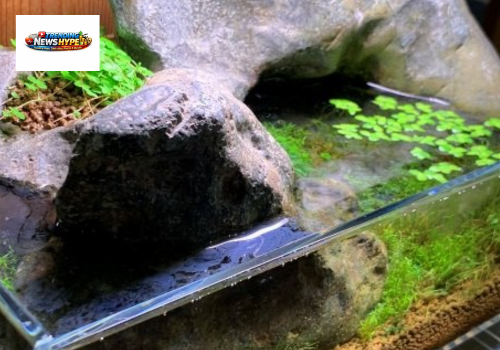
7. Heartleaf Philodendron
This variety is especially popular for hanging aquarium setups.
Care Benefits:
- Very easy to grow
- Excellent water filtration support
- Beautiful trailing vines
- Adapts quickly to water rooting
Fish Safety: Same calcium oxalate consideration as standard philodendron — generally fine left undisturbed, but not a plant to choose if your fish are known leaf-nibblers.
pH Effect: Indirect, via nutrient uptake; no direct chemical influence on pH.
Honest Care Challenge: Because it roots and trails so readily, heartleaf philodendron can quickly take over a tank’s surface area if not trimmed back, shading the water and reducing light reaching any true aquatic plants below.
8. Anacharis (Egeria densa)
Unlike the houseplants above, Anacharis is a true aquatic plant, meaning it grows fully submerged rather than rooting with leaves in the air.
Fish Safety: Anacharis is considered safe and even beneficial to eat for many fish species, including bettas, and is often recommended specifically as an edible, oxygenating plant for tanks with grazers.
pH Effect: As a fast photosynthesizer, Anacharis can raise pH slightly during the day by consuming CO2 from the water, with a small dip overnight as it releases CO2 back — an effect too small to matter in most home tanks but worth knowing if you’re chasing a very specific pH target.
Honest Care Challenge: Anacharis needs genuinely bright light to thrive; in dim tanks, it grows thin, leggy, and sheds leaves, which then adds to the very waste load it’s supposed to help control.
9. Java Fern (Microsorum pteridophyllum)
Java fern is another true aquatic plant, prized for being nearly indestructible and safe around almost any tank inhabitant.
Fish Safety: Considered one of the safest plants for any community tank — it isn’t a preferred food source for fish and has no known toxic compounds of concern.
pH Effect: No meaningful effect on pH; it simply absorbs nutrients from the water column and substrate without releasing anything that shifts chemistry.
Honest Care Challenge: Java fern’s rhizome (the thick horizontal stem) will rot if buried in substrate — it must be tied or glued to driftwood or rock with only the roots in the substrate, which trips up a lot of first-time aquascapers.
10. Hornwort (Ceratophyllum demersum)
Hornwort is a fast-growing, true aquatic floating or rooted plant frequently recommended as an easy nitrate sponge for new tanks.
Fish Safety: Widely regarded as safe and even beneficial for fish and shrimp to nibble on, and it offers dense cover that nervous or young fish use for shelter.
pH Effect: Like Anacharis, hornwort’s rapid photosynthesis can cause small daily pH swings (slightly higher during the light period, slightly lower at night), though this is rarely significant enough to require correction in a typical home aquarium.
Honest Care Challenge: Hornwort sheds tiny needle-like leaves constantly, especially when stressed by a move or low light, which can clog filters and make the tank look messy until the plant settles in.
Important Care Tips
To keep both plants and fish healthy, follow these guidelines:
- Water Quality: Avoid fertilizers that are not aquarium-safe, as they can harm fish.
- Lighting: Use moderate aquarium lighting for balanced plant growth.
- Cleaning: Regularly check roots to prevent decay or clogging.
- Fish Safety: Ensure plants are non-toxic to aquatic life.
Common Mistakes to Avoid
- Leaving soil on roots (causes ammonia spikes)
- Submerging leaves in water (leads to rot)
- Overcrowding plants in small tanks
- Using chemical fertilizers not safe for aquariums. Read About the Best Bio Gas Plant For Home 2026
Final Thoughts
Indoor house plants for fish tanks offer a perfect balance between beauty and functionality. They naturally improve water quality while creating a stunning green aquatic environment.
Whether you choose fast-growing Pothos or elegant Peace Lily, each plant adds value to your aquarium ecosystem. With proper setup and care, your fish tank can become a living, self-sustaining natural display.
FAQs
1. Can all indoor plants survive in fish tanks?
No, only certain plants that tolerate root submersion are suitable. Most houseplants cannot survive if their entire root system stays underwater for long periods. Plants such as Pothos, Peace Lily, Lucky Bamboo, and Philodendron adapt well when only their roots are submerged, and their leaves remain above the water. Choosing the right species helps prevent root rot and keeps both the plant and aquarium healthy.
2. Do these plants clean aquarium water?
Yes, they help absorb nitrates and reduce waste levels naturally. Their roots take up excess nutrients released from fish waste, uneaten food, and decaying organic matter. This natural filtration helps maintain better water quality, slows algae growth, and creates a healthier environment for fish. While they are beneficial, they should complement regular water changes and proper aquarium maintenance rather than replace them.
3. Is Pothos safe for fish tanks?
Yes, Pothos is one of the safest and most effective aquarium-friendly plants. Its roots can grow directly in the water while the leaves remain above the surface. The plant absorbs excess nitrates and other nutrients, helping improve water quality and reduce algae growth. Pothos is easy to grow, adapts well to a wide range of aquarium conditions, and develops an extensive root system that also provides shelter for fish and shrimp.


Pingback: 12 Stunning Indoor House Plants with Red Flowers (2026 Guide)
Pingback: Best Bio Gas Plant For Home 2026 | Save 50% on Cooking Gas