
Millions of people dream of picking fresh fruit from their own garden, but assume it’s impossible without acres of land. Limited outdoor space is the number one reason gardeners never even try. That’s the exact problem this guide to easy fruit trees to grow in small gardens solves.
Modern dwarf and compact varieties are specifically bred to thrive in containers, raised beds, and tiny plots, delivering real harvests from surprisingly small spaces. You don’t need a big garden.
You just need the right tree. This article shows you exactly which ones to choose. For more ideas on sun‑loving plants that brighten up your outdoor spaces, check out our guide on Hydroponic Gardening for Beginners.
Advantages of Planting Fruits in a Small Garden
Small fruit trees offer many benefits for home gardeners:
Fresh Produce: Pesticide-free, healthy fruits in your own backyard.
Space Efficiency: Dwarf and semi-dwarf varieties use less space compared to full-sized trees.
Low Maintenance: Several small fruit trees are easier to trim, harvest, and maintain.
Aesthetic Appeal: Blossoming and fruit-bearing trees add beauty to the garden.
Educational and Therapeutic: It can be satisfying and relaxing to watch a tree grow and produce fruit.
By choosing the right fruit trees, gardeners can enjoy these benefits even without a large backyard. For more tips on modern gardening techniques, explore our full guide on Hydroponic Gardening for Beginners to make soil-free growing easy and productive.
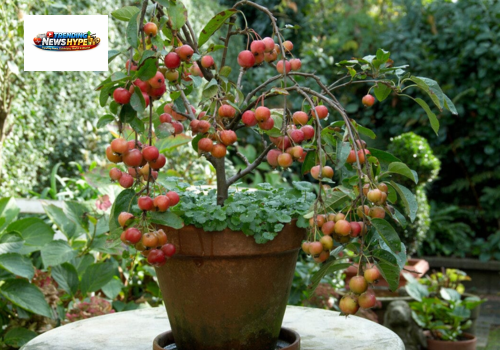
Understanding Rootstock: What Actually Makes a Tree Small
Most gardeners focus on the variety — Gala apple, Meyer lemon, Stella cherry — but the rootstock is what determines how big the tree actually gets. Every grafted fruit tree is two plants in one: the top part (the scion) provides the fruit variety, and the bottom part (the rootstock) controls the tree’s ultimate size, how quickly it comes into bearing, and how well it copes with different soil types.
Rootstocks are classified by the size of the tree they produce. For apples, the most widely used dwarfing rootstocks are M9 and M26. A tree on M9 rootstock stays around 6 to 8 feet tall and starts fruiting within 2 to 3 years.
A tree on MM106, a semi-dwarfing rootstock, will reach 12 to 15 feet — still manageable but noticeably larger. For cherries, Gisela 5 is the standard dwarfing rootstock, keeping trees to around 8 to 10 feet. For plums and peaches, Pixy rootstock produces compact trees well suited to containers and small beds.
When buying a fruit tree, the label should state the rootstock. If it does not, ask before purchasing. A tree sold simply as “dwarf apple” without rootstock information may be on a semi-dwarfing stock and grow considerably larger than expected. Knowing the rootstock lets you plan accurately and choose the right pot size or spacing from the start.
Best Dwarf and Semi-Dwarf Fruit Trees
Small gardens are the best location to grow dwarf and semi-dwarf varieties since they can be maintained at manageable sizes while still producing abundant fruit. The following are the most popular:
Apples
Dwarf apple trees are appropriate for small gardens because they are typically 6 to 10 feet tall. The most well-liked ones are Fujis, Gala, and Honeycrisp.
Apples require frequent pruning to maintain healthy growth and good fruit production. They should be planted in full sun in well-drained soil that is not compact. Many dwarf apple trees produce better harvests when planted near another compatible apple variety for cross-pollination.
Expected yield: A mature dwarf apple tree produces 20 to 50 lbs of fruit per season. Minimum pot size: 18 to 20 inches in diameter, at least 18 inches deep. Time to first fruit: 2 to 3 years on M9 rootstock; 3 to 4 years on M26.
Main care challenge: Apples are susceptible to scab and codling moth — a regular spray programme or fruit bags on developing apples keep both manageable without chemicals.
Citrus Trees
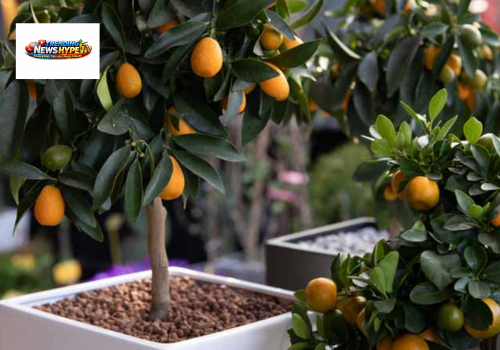
Citrus trees, including lemons, limes, and mandarins, are cultivated in pots or little garden beds. In warm regions, tiny, fragrant types like Meyer Lemon and Calamondin Orange grow fruit nearly year-round. Citrus trees require well-drained, mildly acidic soil, ample light, and moderate irrigation.
Expected yield: A container-grown Meyer lemon produces 20 to 40 lemons per year once established. Minimum pot size: 15 to 20 inches in diameter; repot every 2 to 3 years as the tree matures. Time to first fruit: 1 to 2 years from a grafted tree; 3 to 5 years from seed.
Main care challenge: Yellowing leaves are the most common problem and almost always indicate either overwatering or a nitrogen or magnesium deficiency — a citrus-specific liquid feed applied monthly through the growing season usually resolves both.
Peaches
Small gardens are ideal when you pick peach trees of dwarf varieties, such as the Bonanza and the El Dorado. These are 6–8 feet tall trees that bear juicy, sweet summer fruit. Peaches have to be pruned frequently to keep them in shape, increase air circulation, and stimulate bigger fruit.
Expected yield: Dwarf peach trees produce 30 to 50 lbs per season at full maturity. Minimum pot size: 20 inches in diameter; peaches have vigorous roots and need the space. Time to first fruit: 2 to 3 years from a grafted tree.
Main care challenge: Peach leaf curl is a fungal disease that causes the leaves to blister and distort — it is prevented by applying a copper-based spray in late winter before the buds open, as treatment after symptoms appear does not work.
Cherries
Dwarf cherry trees such as Stella and Compact Stella fit in small spaces. They give beautiful spring flowers and small, flavorful fruits in early summer. Cherries grow well in full sun, fertile soil, and proper drainage, and are also suitable for planting in containers on patios or balconies.
Expected yield: A compact cherry tree on Gisela 5 rootstock produces 10 to 20 lbs of fruit per season. Minimum pot size: 18 inches in diameter; cherries do not like root restriction, so on the larger side. Time to first fruit: 3 to 4 years.
Main care challenge: Birds will strip a cherry tree completely within a day of the fruit ripening — netting the tree as soon as the cherries begin to colour is essential, not optional.
Figs
Figs are low-maintenance plants that can be grown in compact gardens and large pots. Varieties such as Brown Turkey and Celeste grow 6–10 feet tall and produce sweet fruit in late summer. Fig trees are drought-resistant once established and prefer full sun with well-draining soil.
Expected yield: An established fig in a container produces 20 to 40 fruits per season; garden-planted figs with restricted roots can produce more. Minimum pot size: 15 to 18 inches — root restriction actually encourages fruiting rather than leafy growth, making figs one of the few fruit trees that perform better slightly pot-bound. Time to first fruit: 1 to 2 years from an established plant.
Main care challenge: In cold climates, figs need frost protection — wrap the pot and branches with fleece once temperatures consistently drop below freezing, as the embryonic fruitlets that form in autumn are killed by hard frost and determine the following year’s crop.
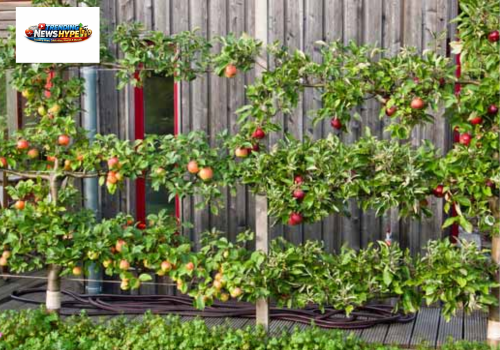
Training and Espalier: Growing Fruit Trees Flat Against a Wall
Espalier is the practice of training a fruit tree to grow flat in a two-dimensional form against a wall, fence, or trellis. It is one of the most space-efficient methods available to small garden growers and has been used in kitchen gardens for centuries.
An espaliered apple or pear trained against a south-facing fence takes up as little as 12 to 18 inches of depth while spanning several feet of horizontal space, producing a full harvest in a fraction of the footprint of a freestanding tree.
The method works by selecting and tying in horizontal branches at regular intervals — typically 12 to 18 inches apart — while removing any growth that extends outward from the flat plane. The tree is pruned twice a year: once in summer to remove new shoots growing away from the wall, and once in winter to shape the permanent framework.
Apples and pears on dwarfing rootstocks are the most reliable choices for espalier since they are slow-growing enough to manage easily. Figs also espalier well and benefit from the warmth a sunny wall provides.
Wall-trained trees also benefit from the reflected heat of the wall surface, which is particularly useful in cooler climates for ripening fruit that would otherwise struggle. A south or west-facing wall can raise the effective temperature by several degrees compared to an open position, making it possible to grow varieties not usually suited to the climate.
Pollination: Which Fruit Trees Need a Partner
Some fruit trees are self-fertile, meaning a single tree will set fruit on its own. Others require a second tree of a compatible variety nearby to pollinate them. Getting this wrong is one of the most common reasons a healthy-looking fruit tree produces nothing.
Self-fertile varieties suitable for single planting include: Stella cherry, Brown Turkey fig, Meyer lemon, most peaches and nectarines, including Bonanza and El Dorado, and some apple varieties, including Braeburn and Cox’s Orange Pippin. These will fruit reliably when grown alone.
Most apples, pears, and many plums require cross-pollination. For apples, compatible varieties need to flower at the same time and belong to the same or adjacent pollination groups. Pollination groups for apples run from 1 to 7, with trees in adjacent groups usually compatible.
For example, Gala (group 4) pollinates well with Fuji (group 6) or Cox (group 3). If a neighbour’s garden has an apple tree within about 50 feet, their tree may pollinate yours — bees forage over that distance easily. If no compatible tree is nearby, plant two compatible varieties or choose a self-fertile variety from the outset.
Pears follow the same logic and share pollination groups with apples in some cases. Conference pear is partially self-fertile and the most reliable choice for a single tree. Most sweet cherries need a second tree unless they are on a self-fertile rootstock.
How to Grow Fruit Trees in a Small Garden
To have fruit trees in your small garden prosper, observe the following points:
Select the Proper Variety: Select dwarf or semi-dwarf trees that can grow in small areas and containers.
Get Proper Sunlight: The majority of fruit-bearing trees require at least 6–8 hours of full sunshine daily. Read More: Top Flowering Plants for Full Sun
Good Soil: Well-draining soil helps prevent root rot and supports healthy growth.
Water: Trees planted in containers require regular watering.
Prune and Train Trees: Pruning ensures size control, enhances fruit production, and promotes airflow. Espalier or vertical training helps maximize space.
Fertilise Properly: Organic fertilizers or balanced slow-release fertilizers should be used to support healthy growth and fruiting. With these tips, small-space gardeners can enjoy productive fruit trees without the challenges of large orchards.
Container Gardening of Fruit Trees
Container gardening can be used in small gardens, patios, and balconies. Many fruit trees adapt well to pots or raised beds, and containers provide flexibility for moving trees to maximize sunlight exposure.
Select large, sturdy pots with good drainage and use quality potting soil rich in organic matter. Container fruit trees need regular watering, especially during summer, and occasional fertilization.
The very successful fruit trees in containers are:
- Meyer Lemon
- Dwarf Fig
- Dwarf Peach
- Compact Apple Varieties
Containers also enable gardeners to regulate soil conditions, prevent invasive roots, and grow fruit trees in poor soils or limited garden spaces.
Small Garden Fruit Trees: Seasonal Considerations
It is important that fruit trees get planted at the right time to grow and bear fruit:
Spring: The best time to plant most fruit trees because they have time to establish roots before summer.
Summer: Container trees and tropical varieties are suitable in warm regions.
Fall: Suitable in mild climates where roots can develop before winter dormancy. When it comes to fruit trees, selecting the right planting time helps trees adapt to the environment and produce maximum yields.
Conclusion
Growing fruit trees in a small garden is an excellent way to enjoy fresh, homegrown produce while making the most of limited space. Dwarf and semi-dwarf varieties provide abundant harvests without overwhelming the garden, and many can even thrive in containers on patios or balconies.
By choosing the right varieties, providing adequate sunlight, and following proper care practices, gardeners can successfully grow healthy fruit trees and enjoy delicious harvests for years to come.
Frequently Asked Questions
1. What are the best fruit trees for a small garden?
Some of the best fruit trees for small gardens include dwarf apples, Meyer lemons, dwarf peaches, compact cherry trees, and figs. These varieties remain manageable in size while producing plenty of fruit.
2. Can fruit trees grow successfully in containers?
Yes, many dwarf fruit trees grow very well in containers. Popular choices include Meyer lemon, dwarf fig, dwarf peach, and compact apple varieties. Containers are ideal for patios, balconies, and gardens with limited space.
3. How much sunlight do fruit trees need?
Most fruit trees require at least 6–8 hours of direct sunlight each day to produce healthy growth and abundant fruit. Planting them in a sunny location helps maximize harvests and overall tree health.

Pingback: Hydroponic Gardening for Beginners - trendingnewshype.com