Solar garden lighting is likely the best option if you’ve been considering adding lights to your garden but don’t want to deal with wiring, electricians, or growing electricity costs. What was once a niche eco-friendly product has become a mainstream home upgrade that millions of people are now choosing, thanks to significant technological advancements over the past few years. In the garden, solar power helps boost the home.
Interest in solar garden lighting has grown significantly in recent years. Improvements in solar panels, batteries, and LED technology have made these lights more practical, affordable, and reliable than older models. In every home garden, it is necessary. As a result, more homeowners are choosing solar lighting as a simple way to brighten outdoor spaces while reducing electricity use.
This guide covers everything a beginner needs to know: how solar garden lights work, what types are available, what the numbers mean on the box, where to place them, and what mistakes to avoid. Read More: 10 Best Indoor Plants for Cleaner Air According to Research.
Solar Garden Lights Work
The core idea is simple. A small solar panel on top of the light absorbs sunlight during the day and converts it into electricity through photovoltaic cells. That electricity gets stored in a rechargeable battery inside the light. When the sun goes down, a built-in sensor detects the darkness and automatically switches the LED on, drawing power from the stored battery. It’s easy and low-budget for your garden. According to me its important to use for your home garden.
There are 4 main components in every solar garden light: the solar panel, the battery, the LED bulb, and a controller circuit. The controller is what manages the whole process. It prevents the battery from overcharging during the day and from draining completely at night, which extends the battery’s overall lifespan.
The LED is the reason these lights work so efficiently. LEDs use very little electricity to produce light compared to older bulb types. They also last much longer, often tens of thousands of hours of actual use. This is why solar lights can run reliably on a small battery charged by a panel no bigger than a playing card.
Modern monocrystalline solar panels, which are the best type available for garden lights, now convert up to 25% of sunlight into electricity. That is roughly double the efficiency of panels from just 5 years ago. It means your lights charge effectively even on overcast days, which was a common complaint about older solar lights.
In testing solar lights in both sunny and partially shaded locations, lights placed in areas receiving at least 6 hours of direct sunlight generally stayed illuminated much longer throughout the night.
There are a few types of Solar Garden Lights
Knowing the different types helps you pick the right one for the right spot. There is no single best type since each one serves a different purpose.
Path lights are the most common type. They are small stake lights that you push into the ground along a walkway or garden border. They provide gentle, low-level lighting that guides you safely along a path at night. These typically produce between 5 and 30 lumens and are designed for ambience rather than bright illumination.
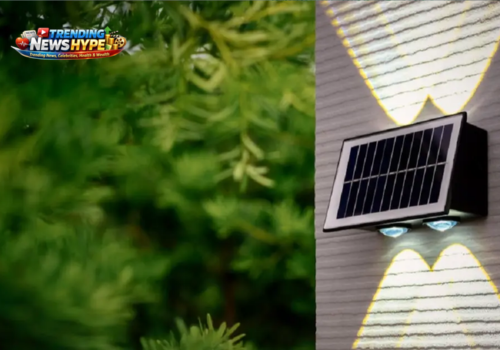
Spotlights are used to highlight a specific plant, tree, statue, or architectural feature. They are brighter than path lights, usually producing between 100 and 200 lumens, and can be angled to direct light exactly where you want it. Solar spotlights have improved significantly, and today’s premium models deliver between 1,200 and 3,000 lumens, output that used to require hardwired fixtures.
String lights are the festival-style lights that drape along fences, pergolas, or trees. They are primarily decorative and create a warm, social atmosphere. Most solar string lights include a panel that sits separately from the lights themselves, connected by a wire so you can position the panel in a sunny spot while the lights hang wherever you like.
Motion sensor lights are the most practical choice for security purposes. They stay off until they detect movement, then switch on at full brightness. This also extends the battery life significantly since the light is only active when needed. Modern 180-degree radar sensors trigger within milliseconds and cover a wide arc, solving a problem that made early motion-sensor solar lights feel unreliable.
Decorative lights come in shapes like flowers, lanterns, mushrooms, and animals. They are purely aesthetic and typically produce very low light output, but they add personality to a garden and work well in clusters.
Understanding Lumens: What the Numbers Mean
One number matters more than anything else when buying solar garden lights, and that is lumens. Lumens measure how much visible light a bulb produces. More lumens means a brighter light.
Here is a simple guide to what different lumen levels look like in practice:
- 5 to 15 lumens is very soft and atmospheric. Good for decoration and mood lighting along a garden path. You will be able to see them glowing, but they will not actually illuminate the ground much.
- 30 to 100 lumens is practical path lighting. Enough to clearly see where you are walking without being harsh or glaring. This is the sweet spot for most residential garden paths.
- 100 to 300 lumens is accent and spotlight territory. Enough to illuminate a small tree, a feature wall, or the front of a flowerbed.
- 1,000 lumens and above is security lighting. This is the kind of brightness you want near a driveway or dark corner of a property where you need real visibility.
Pathway lights and decorative fixtures usually range from 5 to 30 lumens, while functional pathway lighting is typically between 50 and 150 lumens. For accent and spotlighting, 300 to 1,200 lumens is the right range. For large security areas, 15 to 30 watts with 1,000 to 3,000 lumens provides enough light to cover a standard two-car driveway at full brightness.
Color temperature is also worth paying attention to. It is measured in Kelvin. A warm white light around 2,700 to 3,000 Kelvin looks soft and natural in a garden setting. Cooler, bluer lights above 5,000 Kelvin can look harsh outdoors and are generally avoided for residential gardens.
The Real Cost Savings
One of the biggest reasons people switch to solar garden lighting is money. Solar lights draw zero electricity from the grid, which means they add nothing to your electricity bill. Over the lifetime of the product, the savings add up.
Since solar lights operate independently from the electrical grid, they do not add to household electricity costs. Over time, homeowners can reduce outdoor lighting expenses while avoiding the costs associated with wiring and professional installation.
The upfront cost has also come down dramatically. Entry-level solar garden lights now start as low as a few hundred rupees or a few dollars per unit, depending on your market. Mid-range lights with better panels and longer battery life sit in the 1,000 to 3,000 rupee range per unit. Premium solar security lights cost more but eliminate the need for electrical installation, which can easily cost several times more than the lights themselves.
There is no wiring, no electrician fee, and no ongoing electricity cost. For most households, solar garden lights pay for themselves within 1 to 2 years compared to wired alternatives.
Where to Place Solar Garden Lights:
Here is the single most important thing to understand about solar garden lights: placement determines everything. In many cases, poor performance is caused by placing lights in shaded areas where the solar panels cannot receive enough direct sunlight. Moving the lights to a sunnier location often improves charging and nighttime performance significantly.
Solar panels need direct sunlight. North-facing walls and surfaces that stay in shadow for most of the day will not charge the panels properly, no matter how good the light is. South-facing spots, open garden areas, and places that get at least 6 hours of direct sun daily are ideal.
A useful trick is to raise the light slightly above ground level. A path light sitting on the soil can end up in the shadow of a nearby plant, especially as that plant grows. Mounting the same light on a 2-foot shepherd’s hook or raised stake lifts the solar panel above ground-level shade and can make a significant difference in charging performance.
For spotlights aimed at a plant or garden feature, position the light slightly away from what it is illuminating rather than right at its base. A light placed at the base of a shrub often ends up in that shrub’s shadow as it grows. Positioning it a foot or two away and angling it back toward the feature keeps the solar panel in sunshine while still lighting up what you want to highlight. Also keep lights at least 12 inches away from tall plants to prevent the foliage from blocking the panel.
On Quora, someone setting up solar lighting for the first time was advised to stake the solar panel in the sunniest patch of ground available and bury the connecting lead under soil or bark to keep things looking neat. That approach works well for string lights and spotlights where the panel can sit separately from the light itself.

Common Beginner Mistakes to Avoid
Buying based on watts instead of lumens. Watts measure energy consumption, not brightness. A low-wattage LED can be very bright. Always compare lumens when buying solar garden lights.
Ignoring the IP rating. The IP (Ingress Protection) rating tells you how waterproof a light is. IP65 means the light is dust-tight and protected against rain. For outdoor use, always buy lights rated at IP65 or higher. Anything lower may get damaged in the rain.
Not cleaning the panels. Dust, bird droppings, and general grime build up on solar panels over time and reduce how much light they absorb. Wiping the panel with a damp cloth every few weeks keeps the charging efficiency high. It takes 30 seconds and makes a real difference over time.
Placing lights too close together. Beginners often cluster lights in one spot and leave other areas dark. Spacing path lights about 6 to 8 feet apart gives better, more even coverage than bunching them close together.
Expecting full brightness in winter. Shorter daylight hours in winter mean less charging time, which means shorter or dimmer operation at night. Some lights have a power-saving mode that reduces brightness but doubles the runtime, which is useful during the winter months. Look for this feature if you live in a climate with significant seasonal variation.
Forgetting to replace the battery. Solar light batteries typically last between 1 and 5 years depending on the battery type and how often the light is used. When runtime starts dropping noticeably, the battery usually needs replacing. Some lights use standard rechargeable AA or AAA batteries, making replacement easy and cheap.
Best Uses for Solar Garden Lights in 2026
The most popular and practical ways people are using solar garden lights right now are:
Lighting garden pathways and driveways so visitors can navigate safely at night without stumbling over edges or steps. Path lights spaced evenly along a walkway are the most common and most effective use.
Uplighting trees and shrubs from below to create dramatic silhouettes at night. Position the light at the base of the plant and angle it upward for the best effect.
Highlighting a water feature, garden sculpture, or focal point like a large planter or garden arch. A single well-placed spotlight can transform a garden feature after dark.
Security lighting at entry points, gates, and dark corners of a property. Motion-activated solar security lights are now reliable enough to genuinely deter intruders while keeping electricity costs at zero.
Creating atmosphere on patios, decks, and outdoor dining areas with string lights or lanterns. After the pandemic, outdoor living spaces have become a much bigger part of daily life for many families, and solar lighting is one of the cheapest ways to make those spaces usable after dark.
Faqs
1. What are the outdoor lighting trends for 2026?
In 2026, outdoor lighting trends focus on smart solar lights, motion sensor technology, energy efficiency, and modern minimalist designs. Eco-friendly and wireless solutions are becoming more popular.
2. How to choose the right solar-powered outdoor lights?
Choose solar lights based on brightness (lumens), battery life, weather resistance (IP rating), charging efficiency, and placement area. Always pick durable and energy-efficient models for long-term use.
3. Best solar garden lights to buy
The best solar garden lights are those with high-efficiency solar panels, long battery backup, waterproof design, and adjustable brightness. LED pathway lights, wall lights, and motion sensor lights are popular choices.
4. Lumens are best for solar garden lights
For garden lighting, 10–50 lumens is ideal for decoration, 50–200 lumens for pathways, and 200+ lumens for security lighting. Choose based on your lighting purpose.
Conclusion
The novelty stage of solar landscape lighting has long since passed. There is a solar light to fit almost any garden type and budget thanks to the variety of types available, longer-lasting batteries, and more efficient panels.
It’s best to start simply if you’re a newbie. Determine how much direct sunlight each of the two or three areas you wish to light receives during the day, select lights with the appropriate brightness level for each use, and position the panels where they will receive the most sunlight. These three choices determine everything else.
Starting with a few well-placed lights is often the easiest way to learn what works best for your space. With proper placement and occasional maintenance, solar garden lighting can provide years of reliable illumination without increasing electricity costs. Read More: Natural Fertilizers for Plants at Home.