
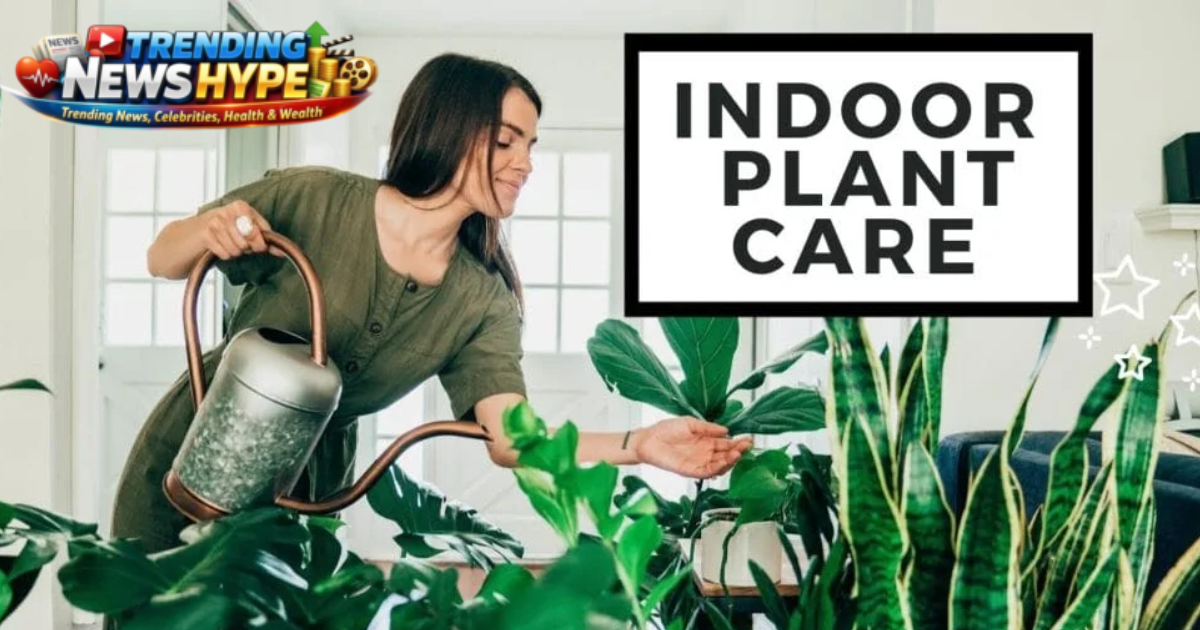

Planting in your house is among the simplest methods of making your home better, happier, and even healthier. Nevertheless, a significant number of amateurs find it hard to sustain vegetation because they do not know how. This is an excellent guide to a complete Indoor plant care & tips including watering, lighting, and it is recommended to beginners of indoor gardening. If your home has limited sunlight, explore our guide on amazing low-light indoor plants you can grow to find the best plants that thrive even in dim spaces.
Basic Houseplant Care
And when you are new to plants, begin easy. The selection of simple indoor plants by the beginners can make a tremendous difference in your success. Snake plants, pothos, ZZ plants, and spider plants are all plants considered to be forgiving and adaptable.
To learn the process of growing indoor plants, it is necessary to first get to know the fundamental requirements of the plants: light, water, soil, and care routine. When you know these, it is much easier to keep plants.
Watering / Care: The Best Part
Watering is one of the most widespread errors in houseplant maintenance manuals. The frequency of watering of house plants varies based on the type of plant, the size of the pot and the environment.
Rather than following a rigid program, examination of the soil:
● Dry soil – time to water.
● Dry soil → time to water
● Moist soil → wait
It helps to make a watering schedule of an indoor plant, but it is important to be flexible.
Symptoms of Over watering Plants
The most common cause of plant death is overwatering.● Bad odor of the earth. Watch for:
● Yellowing leaves
● Mushy stems
● Foul smell from the soil
These are just indicators of excessive watering of plants and you need to cut down watering as soon as possible.
Effective Plant Drainage Advice
● Proper drainage is necessary.
● Utilize pots with drainage holes.
● Do not leave water in trays. Always:
● Use pots with drainage holes.
● Avoid letting water sit in trays.
● Choose well-draining soil
● Root rot is prevented by following these correct plant drainage tips.
Indoor Plant Humidity
A great variety of indoor plants are flourishing at moderate humidity. Assuming your home is dry:
● Mist plants occasionally
● Use a humidifier
● Group plants together
Leaves of the indoor plants are healthy and bright as they are maintained in the right humidity.
Lighting & Positioning:
Lighting is very important in the health of plants. It is important to know which light to use on indoor plants to succeed or not.
● Basking indirect sunlight plants: This is preferred by most of the house plants (close to the window, but not direct sun).
● Houseplants that live in low light: Snake plants and ZZ plants are able to live in low-light environments.
Types of Light
● Bright indirect sunlight plants: Most houseplants prefer this (near a window, but not direct sun)
● Low-light houseplants: Snake plants and ZZ plants can survive in dim areas
Placement of Indoor Plants
The location of the indoor plants depends on the light requirements:● Close to windows in the light.● Low-light plant corners or shaded areas.
● Near windows for bright light
● Corners or shaded areas for low-light plants
Plants should not be placed close to air conditioners or heaters.
Lighting Guide of Indoor Plants
In case of the limitation of natural light, go by the interior plant lighting guideline:
● LED grow lights.
● Have lights on 1012 hours a day.
● Change distance depending on the type of plant.
● Use LED grow lights
● Keep lights on for 10–12 hours daily.
● Adjust distance based on plant type.
Soil & Fertilizer: Developing a Solid Foundation
Good soil is the beginning of healthy plants. Use of the best soil in indoor plants guarantees optimal growth.
Houseplant Potting Mix
An excellent houseplant potting mix must:
● Drain well
● Retain some moisture
● Provide nutrients
Do not use garden soil within the house, it is too dense.
Tips on indoor Plant Fertilizer
Plants require nutrients to develop. These are indoor plant fertilizer tips:● Every 2-4 weeks of growing season fertilize.● Feed less in winter.
● Fertilize every 2–4 weeks in the growing season.
● Reduce feeding in winter.
● Don’t over-fertilize
Plant Fertilizer Organic
A good natural alternative is the use of organic manure on plants, e.g. compost or liquid seaweed. It increases the health of the soil and promotes long-term growth.
Repotting Houseplants Guide
Plants have a tendency to grow bigger than their pots. Easy repotting houseplants instructions:
● Select a pot a little larger.
● Refresh soil during repotting.
● Repot every 1–2 years.
● Choose a slightly bigger pot.
● Refresh soil during repotting.
Plant Types: Houseplants 100 Easy to Grow
The success of plant selection is important. The following are examples of low-maintenance houseplants that are ideal to the beginner:
Snake Plant Care
Snake plants are extremely hardy. To take good care of a snake plant:
● Water sparingly
● Tolerate low light
● Thrive on neglect
Pothos Plant Care
Pothos is a type of plant that is easy to maintain. Pothos maintenance involves:● Light or dark adaptability.● Rapid growth and trailing vines.
● Moderate watering
● Bright or low light adaptability
● Fast growth with trailing vines
ZZ Plant Care Guide
The care guide of the ZZ plant is easy:● Does not require much water.● Lives in the dark.
● Needs very little water
● Survives in low light
● Extremely durable
Spider Planting Instructions.
Spider plants are easy to use and appealing. These are tips on taking care of the spider plant:● store in indirect light.
● Keep in bright indirect light.
● Water moderately
● Easy to propagate
Popular Issues and Last Advice
Despite the adequate attention, novices can experience problems. Knowing how to make mistakes can better your houseplant care manual.● Failure to inspect against pests.
Common Beginner Mistakes
● Overwatering plants
● Ignoring light requirements
● Using poor soil
● Not checking for pests.
Last-minute Indoor Gardening Advice
● Only 2-3 plants initially.
● Monitor your plants.
● Seasonally change care.
● Patience is a virtue–plants do not grow overnight.
● Start with 2–3 plants only.
● Observe your plants regularly.
● Adjust care based on seasons.
● Be patient—plants take time to grow.
Conclusion
No, it does not need to be complicated to learn how to care about a houseplant as a beginner. With these few indoor plant care tips, you are sure to have healthy plants in your home. Since knowing the frequency at which to water houseplants to the selection of the most appropriate light to use on indoor plants, each minor step leads to success.
One of the simplest ways to make your home better is to add greenery to your home, which improves the space, atmosphere, and even the air quality. Nevertheless, a large number of novices are unsuccessful at keeping plants alive because of the lack of appropriate knowledge. The guide is a beginners guide to indoor gardening as it tells you all you need to know about indoor plant care tips including watering, lighting and so on. Explore this complete beginner-friendly guide with simple tips and practical steps.
Read more here: https://trendingnewshype.com/the-ultimate-guide-to-growing-easy-vegetables-at-home/
